Differentiation

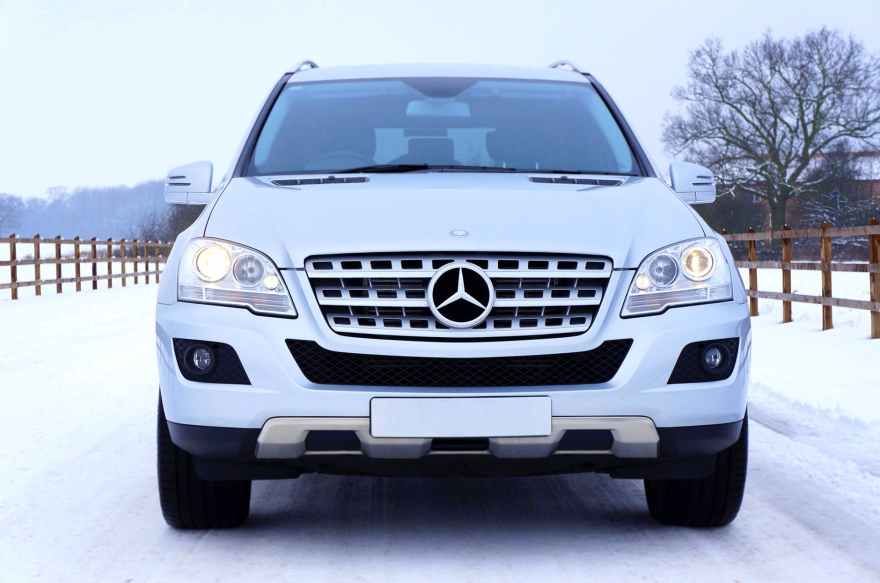
white mercedes benz car on white snow covered ground at daytime
Photo by Mikes Photos on Pexels.com

One of the biggest challenges for luxury car brands in this current climate is the fact that they must appeal to the younger demographic in a different manner than they did in previous years. They must do this without losing its exclusivity. According to Digiday, “Mercedes-Benz and its agency Razorfish teamed up with YouTube influencer and extreme-sport videographer Devin Super Tramp (whose YouTube page has around 4.2 million subscribers) to create a video called The Ultimate Race” (Chen, 2016). Mercedes is striving to have a cooler presence on social media rather than conservative. For example, Mercedes Benz is making more video content for their Instagram account rather than the cliche car at a 45-degree angle. Mercedes Benz appears to be driving consumers to all of their social accounts. Instead of relying on one avenue to get to consumers and potential customers, they cross-promote publications between Facebook, YouTube, and the corporate website as well as between other Mercedes-Benz regional Twitter accounts. According to Digiday, general manager of marketing for Mercedes-Benz USA said, “The more people who want the car, the more exclusive it becomes. And social helps draw more young consumers to Mercedes-Benz, we want to create content that people feel ‘wowed’ by, making their online experience emotional and powerful as if they walk into an actual showroom” (Chen, 2016). This seems to be having a positive impact on Mercedes Benz. According to automotive marketing company Jumpstart, Mercedes-Benz is considered the second-highest luxury brand with a 13 percent share of luxury shopper interest. According to Amobee, “Mercedes-Benz was 72 percent more associated with Instagram in digital content engagement” (Chen, 2016).  

pexels-photo-47214.jpeg
Photo by Veronika Řehořová on Pexels.com

BMW, on the other hand, has more than 19 million Likes on Facebook, 602,000 Twitter followers, and a YouTube channel with more than 400,000 subscribers according to Fast Company. In 2014, BMW did not utilize a hashtag into any of its advertising. When BMW finally entered the world of social media, management failed to understand certain concepts which would translate to likes or hearts. According to Sebastian Schwiening,  a BMW digital marketing manager, “Hearts weren’t in upper management’s lexicon, though. “Normally, we just report use on things like our channels and website.” BMW was hesitant to adopt hashtags because they were afraid that it would loosen controls of its brand messaging. BMW has accepted the idea that a successful social media engagement doesn’t depend on the “cool kids,” or the most popular people. What matters is who has the best stories (link to the article here).


Weixen

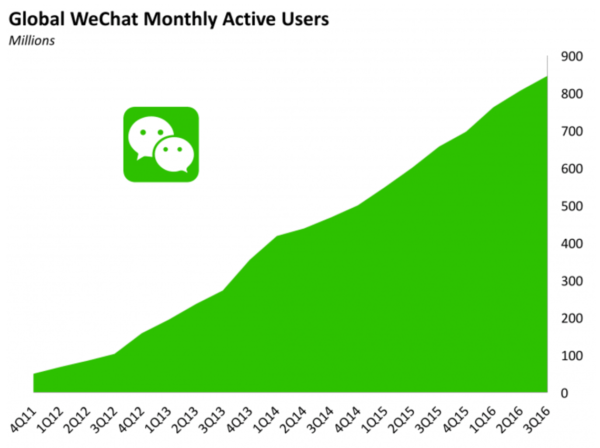
Have you heard of Weixen? If not, Weixen when translated from Mandarin means micro-messaging. In the United States, you may know it as WeChat. Founded in 2011 and owned by Tencent, WeChat has 902 million daily users. In addition, about 38 billion messages are sent on the platform every day (check out this article from The Verge). Tencent, is a Chinese multinational holding company. If you’ve played or are familiar with League of Legends, Clash of Clans, or Gears of War, Tencent is the company that own these gaming franchises. Just FYI, Tencent’s share price has surged nearly 130 percent as WeChat has approached 1 billion users. It has used its cash to buy stakes in companies the world over, including here in the U.S: Tesla, Snapchat and Lyft now all count Tencent as an investor (Time). Back to WeChat, WeChat became a global phenomenon, reaching more than 100 million users outside China within 12 months; it was the second-most-downloaded app in India for 2013.
Do you know why WeChat is so popular? One of the reasons is due to integration/ ease of use. What makes WeChat so popular is that fact that users do not have to leave the app. The demographic that WeChat targets is young smartphone owners. WeChat combines features of communication, social media and mobile payment apps. According to Business Insider, WeChat users can do just about anything, including play games, send money to people, make video calls, order food, read the news, book a doctor appointment, and more. For example, prior to the Chinese New Year, WeChat developed a marketing campaign that allowed user to participate in the “Red Envelope Campaign”. This is cultural tradition includes a monetary gift that is placed in a red envelope and Chinese people give to family and friends during holiday season. In doing so, users linked their bank accounts with the app/ site.

1_jmPvgEvuW7P_m4TMc_pPLw

Users outside of the country are even able to link their Facebook and Twitter accounts. In China, Facebook and Twitter are banned. Many people compare this social media company to the American social media site, Facebook. According to Fast Company, “the company embraced mobile years before Facebook, and has built a platform, used by 355 million active users, that functionally offers every popular service that Americans are familiar with.” You can utilize the app to hail taxis. WeChat realized that mobile commerce was the future. In 2014, They partnered with Didi Dache which allowed people to hail a cab and pay for it all within WeChat, totally without using cash. WeChat, similar to Facebook also opened their app to third party developers. Check out this cool article on Medium for more statistics on WeChat.

On the contrary, WeChat has come under fire for their closeness to the government. According to The Verge, WeChat will issue virtual ID cards, which individuals would use in lieu of physical state-issued ID cards. WeChat requires users to utilize their government names when registering for the app. One can also point to the fact that the app is really one of the only social media apps/ sites in China. Facebook has been censored since 2009, a South Korean App was blocked, and What’s App was banned in 2017. This censorship in certain ways aids WeChat in their dominance. State-run media and government agencies also have official WeChat accounts, where they can directly communicate with users.


Cyberactivism

18j2p8l1obzyxjpg

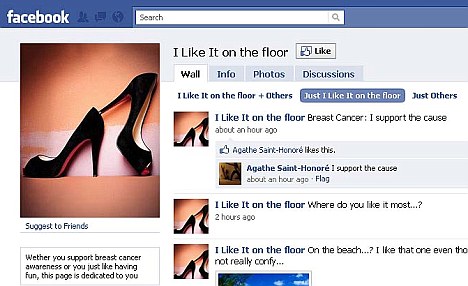
In a new age where social media use is very prevalent, a new type of activism has developed. This new type of activism is called cyber activism. According to Britannica, Cyberactivism is defined as a form of activism that uses the Internet and digital media as key platforms for mass mobilization and political action. Americans use a range of social media sites and are increasingly turning to these platforms to get news and information. Social networking sites have also emerged as a key venue for political debate and discussion and at times a place to engage in civic-related activities. By organizing, creating and supporting hashtag campaigns, people from all over the world can get involved in important conversations (check out this article). Around 2010, memes started populating on Facebook.

Women were messaged asking other women to pick a color that was the same as the bra that they were wearing and post in their status. The status read: NAME, COLOR (i.e., “Melissa, black”, “Rebecca, red”). The meme’s intent was to get men who were on Facebook see their female friends had random one color statuses. This, in turn, would make men inquire. This social media activism was designed to raise awareness for breast cancer month.

Another similar attempt at raising awareness with bleak messaging in order to get eyeballs was “Put the number, followed by the word “inches,” and how long it takes to do your hair… Remember last year so many people took part it made national news” (Mahoney, 2017). One can not help but wonder if these messages actually raise awareness and if there’s a direct correlation between these two campaigns and donations. Social media might be said to revolutionize political activism, connecting us to like-minded peers in previously inconceivable ways but does it really? Such forms of advocacy, particularly those related to social media, are often derisively referred to as slacktivism. These activities pose a minimal cost to participants; one click on Facebook or retweet on Twitter and many can feel like that he or she has helped to support the cause.

People assume that the more attention a cause receives, the more likely public officials are to pay attention to a cause, and thus the more tangible benefits (like legislation, a policy change, or money allocated to help victims of a crisis) there will be. Campaigns for attention also often assume that more attention will lead to a greater likelihood of increased participant engagement, or an increase in financial support (check out this article in the Washington Post). After all, it’s easier to discuss your opinions online or sign a virtual petition than it is to stand in line for the voting booth or sit through a town hall meeting.

Research shows that people will be more willing to engage in activism that is easy, and less costly: emotionally, physically, or financially. One may argue that it is important not to discourage others from taking that step, no matter how large or small. The real key for grassroots social change is to engage as many people as possible.

Reference:

Mahoney, L. M., & Tang, T. (2017). Strategic social media: From marketing to social change. Chichester, West Sussex, UK: Wiley-Blackwell.

Warby Parker Dominance in Social Media

images


It is amazing how quickly Warby Parker was able to disrupt the eyewear industry. Social media aided Warby Parker in a huge way. Social media allowed Warby Parker to engage with current and potential customers as a tool for addressing customer service inquiries. Due to “audiences now seeing themselves as generators of content, rather than passive receivers of media texts” Warby Parker decided to incorporate consumers in their marketing efforts/ plans. For example, Warby Parker has encouraged fans through their social media accounts to post photos that can possibly include in official branding campaigns. Companies such as Dior, Apple, and Nike have done similar campaigns/ contest. In fact, in 2009,  Burberry was one of the first luxury houses to bring high-end fashion to the masses. They created the “Art of the Trench” campaign. Burberry is known for their iconic trench coat and due to this,  the brand invited the public to upload pictures of people “rocking” the retailer’s best-selling item. In turn, Burberry’s Facebook follower count grew to more than one million. At that time, this was the largest the largest follower base in the luxury sector at the time. According to Offerpop, 65% of brands believe user-generated content is more influential than brand videos and photos, and 85% of consumers find visual user-generated content more influential than brand videos and photos. This is also known as transactional communication as well (click here for more info).

Warby Parker’s mitigated people’s concerns that they could not try on the frames through the creations of the “Home Try-On Campaign.” The campaign aided in Warby Parker’s strategy of transactional communication. Warby encouraged consumers to send pics of them utilizing the program and responded to many of the posts. Warby Parker has also differentiating their content on each social media site. Each social media site has a slightly different demographic. Due to this, Warby Parker saw fit to differentiate each account. According to Pew, 78% of 18- to 24-year-olds use Snapchat,(71% visit the platform multiple times per day. 71% of Americans in this age group now use Instagram and close to half (45%) are Twitter users. 78% of 18- to 24-year-olds use Snapchat. Similarly, 71% of Americans in this age group now use Instagram and close to half (45%) are Twitter users (click here for more info). In early 2017, Warby Parker launched a new limited-edition collection.

Along with this limited-edition, Warby Parker is making a donation to The Girlgaze Project, a multimedia platform created to support women in creative roles. Through social media, Warby Parker has committed to providing prescription glasses to individuals in developing countries. Through this, the company wants to expand its reach as an activist brand by partnering with outside organizations, while creating talk about new products. Social impact is very important to Warby Parker and in a way by creating their own vertically integrated brand, Warby Parker have been able to provide a cheaper sunglass to consumers as well as partner with nonprofits to train locals in 36 countries to become entrepreneurs and sell glasses in their local markets to people who wouldn’t otherwise have access to them.