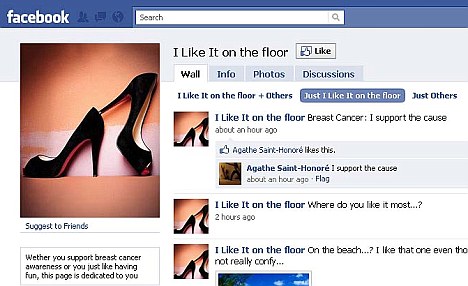
In a new age where social media use is very prevalent, a new type of activism has developed. This new type of activism is called cyber activism. According to Britannica, Cyberactivism is defined as a form of activism that uses the Internet and digital media as key platforms for mass mobilization and political action. Americans use a range of social media sites and are increasingly turning to these platforms to get news and information. Social networking sites have also emerged as a key venue for political debate and discussion and at times a place to engage in civic-related activities. By organizing, creating and supporting hashtag campaigns, people from all over the world can get involved in important conversations (check out this article). Around 2010, memes started populating on Facebook.
Women were messaged asking other women to pick a color that was the same as the bra that they were wearing and post in their status. The status read: NAME, COLOR (i.e., “Melissa, black”, “Rebecca, red”). The meme’s intent was to get men who were on Facebook see their female friends had random one color statuses. This, in turn, would make men inquire. This social media activism was designed to raise awareness for breast cancer month.
Another similar attempt at raising awareness with bleak messaging in order to get eyeballs was “Put the number, followed by the word “inches,” and how long it takes to do your hair… Remember last year so many people took part it made national news” (Mahoney, 2017). One can not help but wonder if these messages actually raise awareness and if there’s a direct correlation between these two campaigns and donations. Social media might be said to revolutionize political activism, connecting us to like-minded peers in previously inconceivable ways but does it really? Such forms of advocacy, particularly those related to social media, are often derisively referred to as slacktivism. These activities pose a minimal cost to participants; one click on Facebook or retweet on Twitter and many can feel like that he or she has helped to support the cause.
People assume that the more attention a cause receives, the more likely public officials are to pay attention to a cause, and thus the more tangible benefits (like legislation, a policy change, or money allocated to help victims of a crisis) there will be. Campaigns for attention also often assume that more attention will lead to a greater likelihood of increased participant engagement, or an increase in financial support (check out this article in the Washington Post). After all, it’s easier to discuss your opinions online or sign a virtual petition than it is to stand in line for the voting booth or sit through a town hall meeting.
Research shows that people will be more willing to engage in activism that is easy, and less costly: emotionally, physically, or financially. One may argue that it is important not to discourage others from taking that step, no matter how large or small. The real key for grassroots social change is to engage as many people as possible.
Reference:
Mahoney, L. M., & Tang, T. (2017). Strategic social media: From marketing to social change. Chichester, West Sussex, UK: Wiley-Blackwell.
 Organic Strategy